
All posts by Matt Boswell
TEM 220: Let’s Go Brandon, One Religion, and The Slow Suicide Of Christianity In Culture.
The Everyday Missionary Podcast 219: Let’s Be Honest, Jesus Was A Loser.
the evangelical blindspot
I think I’m like the Banksy of blogging. I sporadically spring up at times rarely expected. The difference being, Banksy makes bank while my office is in a former one. But today, I was moved to write for the first time since sometime late in the Obama Administration, for today marks 1-year since our church went digital due to Covid. What is the 1st-anniversary gift for a pandemic anyway? N95’s? Toilet Paper? A Flowbee? (ask your parents). Regardless, such a benchmark gives you an opportunity for reflection. So today, I was reflecting. In tandem with this, I read an article this morning and found personal reflection mingled with pastoral grief.
Before we get underway, I want to acknowledge that evangelicalism in the United States is a complex ecosystem with nuanced views on politics, social justice, equity, cancel culture, science, Covid, and the policies around such things (you know, the stuff that made 2020/21 the great social Tilt-A-Whirl). Evangelicalism is not quite as monolithic as cable news implies, but close. That’s why I say an ecosystem. It’s much like rainforests; they look slightly different from place to place, but everyone knows when they are looking at one. Also, like an ecosystem, it affects the larger environment around it. As a pastor, my focus is on how the world experiences the effects of our collective faith ecosystem.
In real-world speak…
would our communities say that what we’re doing, stating, posting, etc., has communicated unmistakably that above all else, we’re here to love and serve them as neighbors because, in doing so, have we truly loved and served God?
would our disbelieving or de-churched communities be even the slightest bit tempted to think, “Yeah, I don’t like their religion, but I’m sure glad they were around for this last year.”?
would they come even close to describing evangelicals as a people of selfless love in a season of cultural suffering?
would “loving” be in the Top 5 descriptors used of evangelicalism in 2020/2021?
Hum.
But, deeper questions are gnawing at my heart, questions of deep spiritual consequence.
Did we as evangelicals sense…
a burden to ensure that above all else, putting others before ourselves was our priority, both in the optics of how it looked to them (since we are to be light) and in the application of how it was experienced by them (since we are to be salt)?
the weight of the First Commandment more heavily on our soul than the want of the First Amendment? Which did we quote more? Which gave us hope more? Which bothered us more when we didn’t see it applied? Which of the “Firsts” was truly first and drove our actions, reactions, dispositions, and perspectives this year?
resolve to love others well with an unmistakable calling to care, even if we looked foolish (per Paul), weak (per Peter), or perhaps worst of all, like sheep (per Jesus)?
Ouch!
In the article I was reading today, written by a conservative Christian publication, this was the line that struck me,
“The survey, which has a sampling error of plus or minus 1.6 percentage points, also found that white evangelicals are also the least likely faith demographic to consider their overall community’s health effect when it comes to deciding whether to get vaccinated. Just 48% of white evangelicals said they would consider community health effects “a lot” compared to 70% of black Protestants, 65% of Catholics and 68% of unaffiliated Americans.”
Now, I know some will find themselves pinned down on the beachhead of the word vaccinated. Others, wary of the woke culture, have already cued an eye-roll with the phrase white evangelical. While important discussions in their own right, they are not my focus here. The devil’s in the details, and he would most certainly love to sidetrack us on those topics so we overlook the real issue that may be of concern. So what’s the “buried lead” of the story? “evangelicals are also the least likely faith demographic to consider their overall community’s health effect when it comes to deciding… Just 48% of white evangelicals said they would consider community health effects ‘a lot’”
That little bit of data may have unearthed a lot about our collective ecosystem’s heart.
Think about it. A faith demographic…
whose founder modeled selfless love toward a planet of sinful neighbors and told us to follow his example (1 Peter 2:18-25).
whose number one most crucial commandment calls it to love God and neighbor (Mark 12:29-31) since to love our neighbor is evidence that we actually love God and it’s not just lip-service (1 John 4:20).
whose entire moral code is summed up in the one great umbrella virtue, “Owe no one anything, except to love each other, for the one who loves another has fulfilled the law… Love does no wrong to a neighbor; therefore love is the fulfilling of the law.” (Romans 13:8-10)
whose final exam is explicitly rooted in what we did to the least of those around us (Matthew 25:31-46).
That faith demographic is the least likely demographic to consider their overall community… Community, a synonym for what the Bible calls our neighbors.
Now, I can imagine right now some will be quick…
to respond.
to take offense.
to reject the conclusion.
to add disclaimers.
to write a retort.
to stop reading and punch an angry emoji into the comments section.
to point out that this is only about “community health effects” (while adding something to the effect of “alleged” or “over-hyped” or “politicized” to the front of the phrase), and that such a topic is not a tangible way to measure if we genuinely love our neighbors.
But God seems to disagree!
Don’t miss me here; I’m not seeking to squeeze public health policy into a command to love our neighbors. God did that for us; I’m merely attempting to take the Bible at its word. The law to love your neighbor comes from a book of the Bible that is explicitly about “community health effects” on our neighbors. How coincidental is that? Leviticus may read like a kid playing with a sensory box in a petting zoo with its 247 laws about disease, diet, discharges, and polycotton blends, but it’s also the birthplace of the “love your neighbor” command (Lev. 19:18). And its 3300-year-old decree to make love tangible toward our neighbors in real world ways still stands. It’s on the lips of Jesus. It’s in the letters of Paul. And it’s seeking to find a home in a 21st-century Christian internet article from a Pew Research poll. God was clear in Leviticus that not considering your neighbor’s well-being (due to leprosy, mold, scaly skin, bodily fluid, disease from sickly animals, [insert your favorite communicable disease here]) was a failure to love them. The failure to consider another is the failure to love.
If I consider myself more than you, regardless of the inventory of reasons, excuses, justifications, rights, laws, problems, or rationalizations, I’m deciding – by intentional will or partisan blindness – not to love you as God instructs me. And thus in the process failing to love God since he tells me to love you. I’m sunk instantly on God’s top-tier expectation.
Paul said a proper display of authentic love is when people “in humility consider others more significant than themselves.” (Phil. 2:2-3). Therefore my friends, a failure to love our neighbors may be the gravest of our collective sins since love stands at the pinnacle of our Lord’s priorities.
That last line is not for dramatic effect, but sober reflection. When the church in Ephesus was about to lose its love, Jesus started packing his bags. They were doing all sorts of good conservative religious stuff, but without love Jesus said there was nothing worth sticking around for (Rev. 2:1-7). Regarding a lack of love, Paul said worse.
We, as evangelicals, are very good at identifying the sins of our society, but perhaps our efforts would be better rewarded by addressing our sins against society. That’s why I’m not all that invested in the pro/con debates between pro vs. anti-mask. Pro vs. anti-vaccination. Pro vs. anti-lock-down. Pro vs. anti-[fill in your blank]. What I am interested in is that each of us, as evangelicals, looks deep and prays hard so as to be confident that whatever positions we take, we take them because we find those to be the most biblical and unmistakable way we can let the world know, “we’re considering you as more significant than ourselves” for that’s what “loving a neighbor” is all about. If our positions clearly communicate to others, “I care about your …” I think that’s what God cares about. If our positions clearly communicate to others, “I care about my …” I think that’s what God is concerned about.
Jesus was emphatic that “the world will know we are his followers by our love.” Wouldn’t it be amazing if the world agreed?
***
Since this has swollen to the length of a book, I might as well offer a reflective epilogue for the one poor completionist who stuck it out. As the article came to an end, I felt a deep-seated pause in my soul. One of those “I don’t want to take another step” pauses that occurs because you don’t want to face what may be the most challenging possibility of all.
Not simply that, perhaps…
we haven’t loved a disbelieving world as well as we would like.
we became diverted by self-interest even though we desire self-sacrifice.
we let our fears or frustrations disrupted our intentions.
we inadvertently became more caught up in the passions of amendments over commandments.
we became too focused on our personal rights vs. God’s gospel objectives.
we are all too human and failed to live up to the ideals of love and want to do better.
But, when confronted with the idea that perhaps we don’t consider or love our neighbors as we should… we’re more bothered at the accusation than the possibility.
Or worse still, we hear it and frankly don’t care.
Indifference.
The state which lets you know Jesus has long since left the building.
Ep. 161 Christian, What Kind Of Justice Should You Want In The Next Justice? God’s or Man’s?
An Open Conversation Between A Gay Son And His Pastor Dad
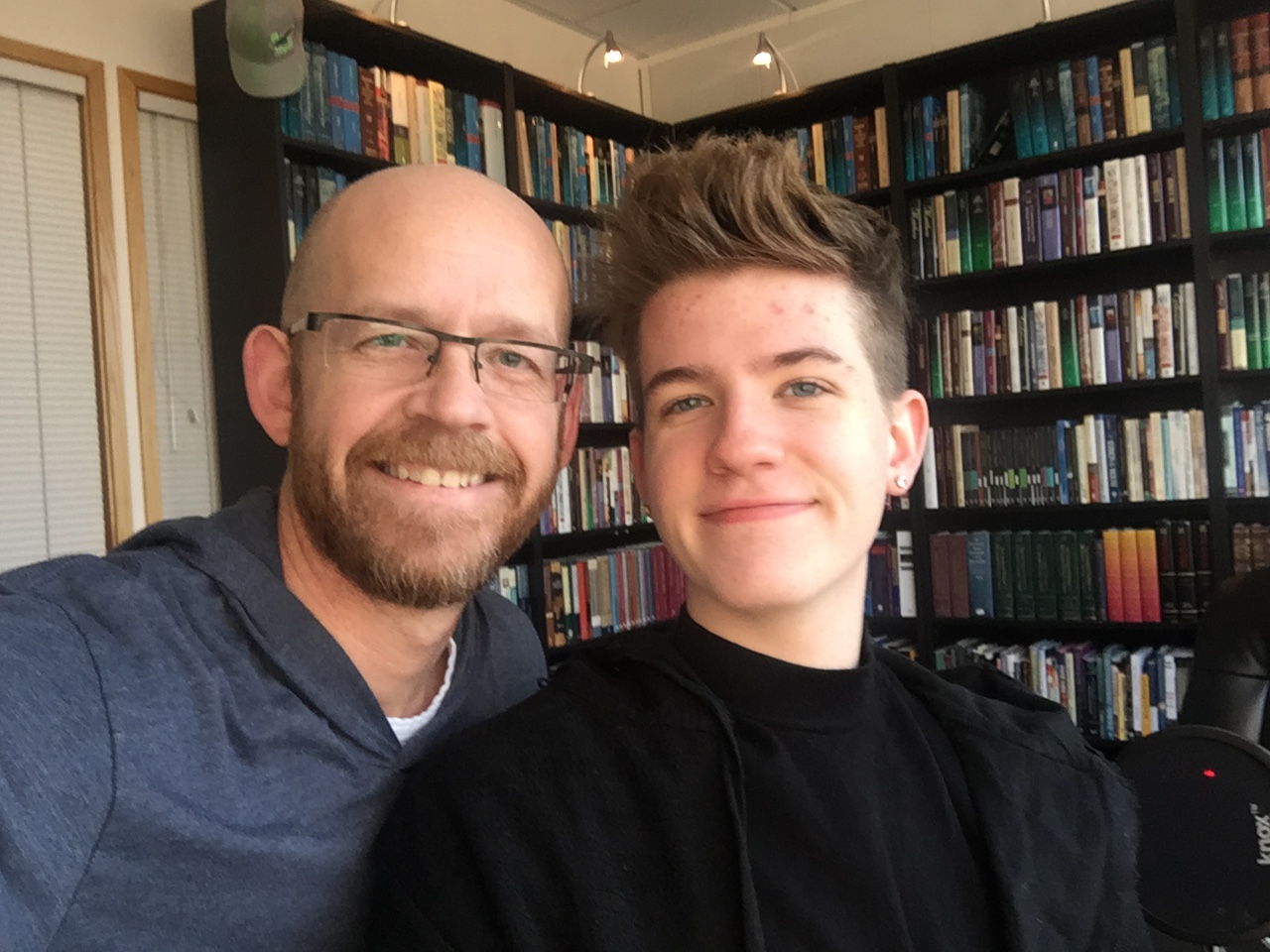 We have saved the best for last. In this recent installment of The Everyday Missionary Podcast, I sat down with my son to talk about what it’s like to come out as gay in a Christian pastor family. Our hope in this was not simply to offer a glimpse into the challenges and closeness that can emerge, but also to display how the Christian and gay community can communicate with one another in a spirit of kindness, empathy, and understanding.
An Open Conversation Between A Gay Son and his Pastor Dad (Pt.4)
I’m A Pastor And My Son Is Gay, Now What? Part 3
 How does a teenage son who is gay and his Christian pastor family begin to find their new normal after his coming out?
Had you asked me that question 6 years ago I probably would have had a tidy theological answer wrapped in a cavalier bow. Today, however, our reality forces us to navigate the messiness of maintaining our faith’s code of lifestyle while equally upholding our faith’s greatest command to love, be it your enemy, neighbor, fellow believer or yes, your 17-year-old unbelieving gay son.
In Part 3 of The Everyday Missionary Podcast, I look at our progress as parents from Gray’s resolved coming out in October of 2017 until now (also, you won’t want to miss Part 4 next week where I talk with my son – Part 3 is incomplete at many levels without Part 4). What you will notice, if you haven’t caught it already, there exists much trial and error in moving toward the high ground of mercy and breakthrough. At times in this series, I’m sure I’ve said things that make both the Christian and LGBT community wince in disagreement (especially in this episode), be it for different reasons perhaps. However, I have intentionally chosen the clumsy, unscripted and unedited format so that the raw humanity of parents and kids can be displayed, both for the good and bad. My heart throughout this is finding a new way forward where the two communities (especially within families) can learn to display neighborly love toward one another even in the midst of our core differences.
I’m A Pastor And My Son Is Gay, Now What Pt. 3
As a side note, I have sincerely appreciated the gay men who have interacted with me after hearing of this podcast, all of which opened by describing themselves as “a gay atheist.” I mention this simply to highlight there was more than one area of difference or worldview in the mix. I want to thank you publicly for your willingness to interact in the spirit of what I hope this creates; the ability to discuss, empathize and understand the “other side” while still holding to the convictions of “our side.” This embodies the spirit of true tolerance which Google Dictionary defines as, “the ability or willingness to tolerate something, in particular the existence of opinions or behavior that one does not necessarily agree with.” You have all been gracious, kind, intelligent and open despite some deep wounds. Thank you!
I’m A Pastor And My Son Is Gay, Now What? Pt. 2
 Three months ago our 17-year-old son shared with us that he no longer held to our Christian faith and that he was in a relationship with a young man. However, our journey with our son and his sexuality began far earlier than a fall day back in October. In this episode of The Everyday Missionary, I have sought to retrace our steps as a family from 12-years-old until that autumn afternoon. In doing so, I seek to highlight some of the things I believe we did thoughtfully as parents in light of our faith, but also some of the things I know I handled badly. Equally, I share how there were things Gray did right in this process, but also things he handled poorly (though I share no specifics regarding Gray since that is his story to be shared in Pt. 4). My hope in this series is that our experience can act as an aid to better handling such events in life with grace, truth, awareness, compassion, seeking and granting forgiveness, and love even in our differences.
I’m A Pastor And My Son Is Gay, Now What? Pt.1
Three months ago our 17-year-old son Gray shared with the family that he is gay and does not hold to our Christian faith. As you can imagine, being a very close Christ-centered family (and also being a pastor), this presented all of us with a new set of realities. As parents and siblings we needed to wrestle with, “How do we honor the beliefs of our faith while also investing in our son and brother whom we deeply love?” And for our son, he needed to discover, “How do I maintain a sense of connection to a family that I deeply love while no longer sharing their faith culture?”
So far we have not solved all those realities, but by God’s grace, we are seeking to do so as a family, and directly from the context of our biblical faith. In light of this, I have dedicated the next four weeks of “The Everyday Missionary Podcast” to sharing how we are seeking to go about this. Pt. 1 will be about the big picture. Pt. 2 will traverse our life with Gray from 12-17 years old. Pt. 3 will be about life since he came out three months ago. The final episode will be an interview with Gray and myself where we discuss the challenges and realities of coming out to your Christian family while still living in the home.
I don’t presume that everyone will agree with everything we share. Nor do I believe I have managed to share everything as clearly as I would like. Yet, our heart is to share our story with others so that perhaps others can learn to better navigate these types of moments “full of grace and truth” (John 1:14).
Part 1: I’m A Pastor And My Son Is Gay, Now What?
Call Us Crazy! 5 Reasons Our Church Voluntarily Pays Taxes
Six years ago this month Redemption Church was planted out of chaos and in hope. Since that time, Jesus has seen fit to not only keep us alive, but has stirred us to thrive. It has been a season loaded with times of uncertainty, yet consistently each uncertainty has been upended by the gracious incursion of God’s provision.
One of the most amazing things is related to how God put all sorts of crazy pieces in place to make it possible to purchase an old bank building along with two adjacent lots on the main street of our city. We are not yet able to use the space for Sundays, but it’s trending that direction within the next two to three years – which is incredible since just two to three years ago we thought there was no way possible we would ever have a building of our own in our city. God still does BIG things.
In becoming property owners, we also wanted to face bigger questions as to the use of our property. A component of our mission statement is “for the good of our city” as highlighted in Jeremiah 29:7. How then would our space fulfill that mission? What things could we do to show our love for the city? To show our commitment to the cares and needs of the community? How could we be good stewards, not only of the facility and finances related to it, but also to exist for the welfare of the city Jesus put us in? So far we’ve come up with a lot of ideas, many of which are already underway in the space as it currently is. But one of the truly novel things we came up with was an added step that I’m not certain I’ve come across before; we proactively decided to voluntarily pay property taxes. Crazy, right? Maybe. But it’s missionally crazy, and if you’re going to be crazy you might as well do it for missional reasons. So why have we chosen to do this? Here are the 5 core reasons.
1) To Display Solidarity with Our Community
Communities need resources to be communities. In the case of cities and counties these resources come in many forms, but one of the key elements is fiscal resources that are acquired by taxing the members of a community. Thus it was our conviction that we could display a heart for “the welfare of our city” by making the conscious decision to contribute, as an organization, in a way that is similar to the inhabitants of our city. Some may find this an odd way to display solidarity, or they may say there are better ways to spend money on community needs. But we believe there is a different form of generosity that is displayed when you let another party that is commissioned to lead a community to decide the best way to use resources for that community. In this way we display that we are in the community like everyone else.
2) To Show Goodwill toward Our City
Believe it or not, being a city official is difficult work. Whether this is an elected official or an employee of a particular department, there will always be the stress of a collection of citizens with different views on how a city should be managed. This stress is compounded by how the city is going to pay for it. This is why to some degree city and county officials don’t get vigorously excited when they hear that a church wants to buy up 5-500 acres for a new campus. It’s not driven by opposition to religion. Rather, there is no revenue for a tax-exempt building and as long as it is a church it will not generate revenue. Thus in a strange sort of way, not only are churches not paying customers, but they take up the space of something else that could be. Therefore, if we are in this “for the good of our city” then one of the ways we can truly stand behind this conviction is to invest in a way that puts tax money where our mission mouth is. In fact, it’s been fun to see how quickly pleasant surprise come across the face of community officials when they discover our position. In this way we display that we are concerned with the concerns of those who lead our city.
3) To Remove an Understandable Area of Criticism
I will assume that most of us have come across some meme on social media that shows a picture of the most ornate church cathedral or megachurch with the caption “tax churches now”. While as a pastor I know that this is a provocative image dislodged from a whole plethora of facts, there is another fact that still remains; the unbelieving communities that we are seeking to reach see this exemption as odd and unfair. It’s a perk for churches, but it’s equally a stumbling block for those not in churches. And if our mission is to remove unnecessary stumbling blocks for the sake of Christ, then for us it made sense to remove this stone in the path of our mission field. In this way we display that the souls that we hope to see saved matter more than the money we can save.
4) To Govern Our Own Sense of “need” vs. “want”
Churches have a strange pull to want more than they need. More staff, more supplies, more tech, more budgets, more of more. This is also true when it comes to space. We tend to believe that bigger buildings will equal bigger crowds, even though we’ve all been lectured ad nauseam to the contrary. We have still blazed ahead with multimillion dollar debt loads that we can’t easily manage since “we built it and they didn’t come – just like everyone told us from the get-go”. Now, I’m not saying big is bad. Nor am I saying that there are not legitimate space needs in churches that are growing. But I do believe churches would make more conservative decisions on buildings and debt if they also had to consider the taxes on the facilities they were building. For us, our future expansion looks to maximize a footprint that is efficient and effective without being intrusive or ostentatious, especially as we look toward future generations which may be more inclined toward minimalism and outward investment. In this way we model that restraint is a virtue that allows for the freedom to pursue opportunities God places before each generation.
5) To Prepare for a Possible Future
Quite honestly, the odds of property tax exemptions sticking around in our post-Christian climate are not in favor of churches. Already we know that the question of the constitutional legality of exemptions for clergy are working their way through the court system. Some project that property tax exemptions for churches will be next to follow. In light of these strong possibilities, we opt to prepare ourselves in the present for the future. By including property taxes in our budget now we have been able to adjust our overall budget so that we are acclimated to this particular cost of doing ministry in our culture. If that day ever comes, we will have already been doing it far before that day. In this way we proactively mitigate sudden budget hikes that would harm our missional priorities.
In the end, am I saying all churches should do this? No. Am I saying that we are more missional, trusting, godly, sacrificial, (fill in the blank) for doing this? No. Is this a creative way we have been led to connect with and build bridges within our community that most churches have not considered? Yes. Ultimately the question for all churches is not what they are required or free to do in matters such as this, but what is Christ leading them to do in order to display commitment toward the welfare of their city?

